
Last updated October 30, 2026
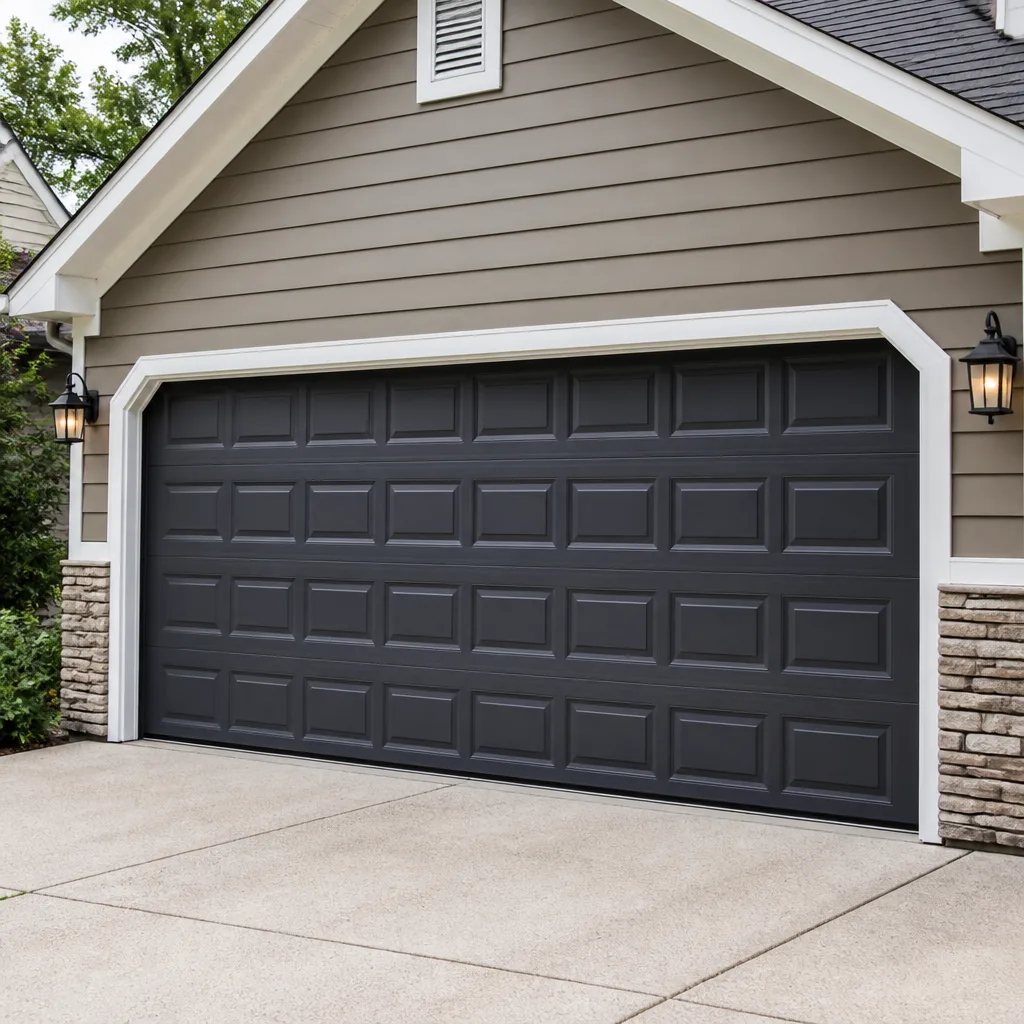 Raised-panel steel
 Carriage house
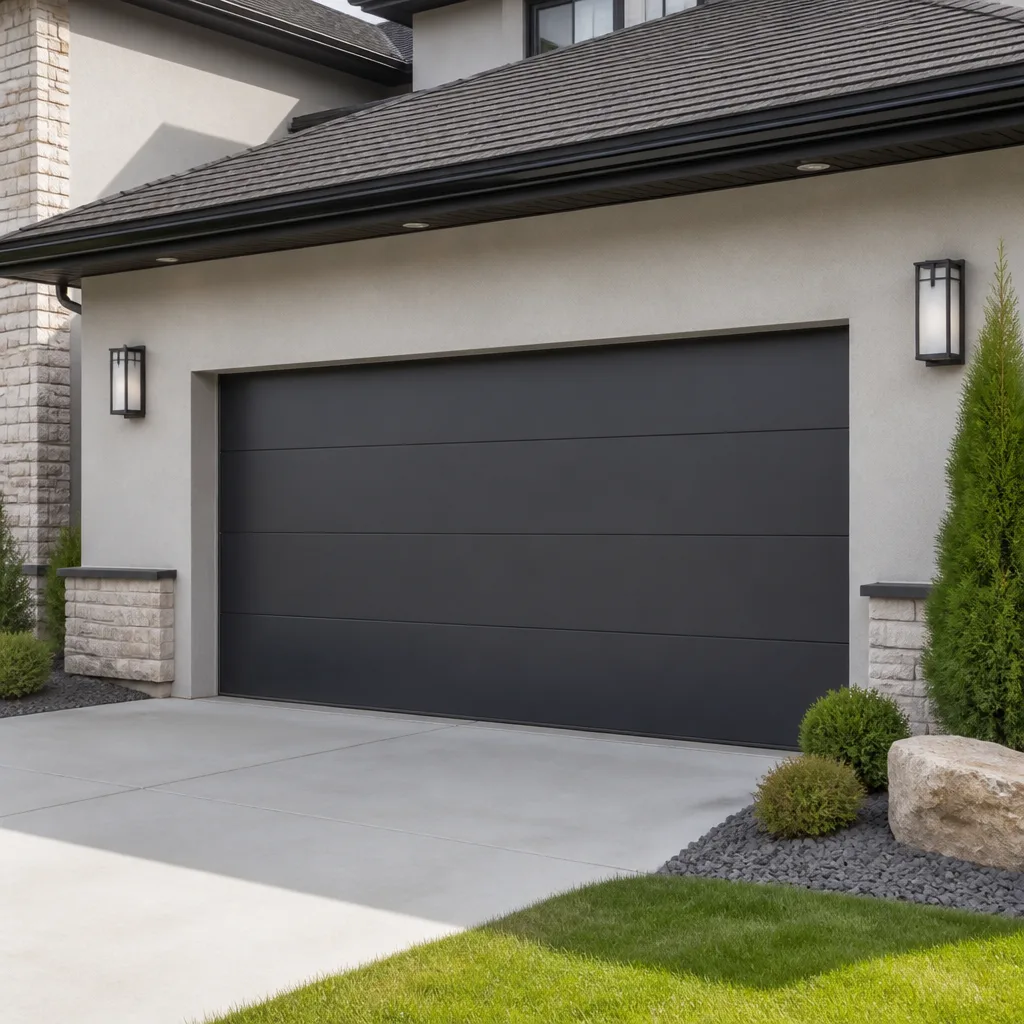 Modern flush
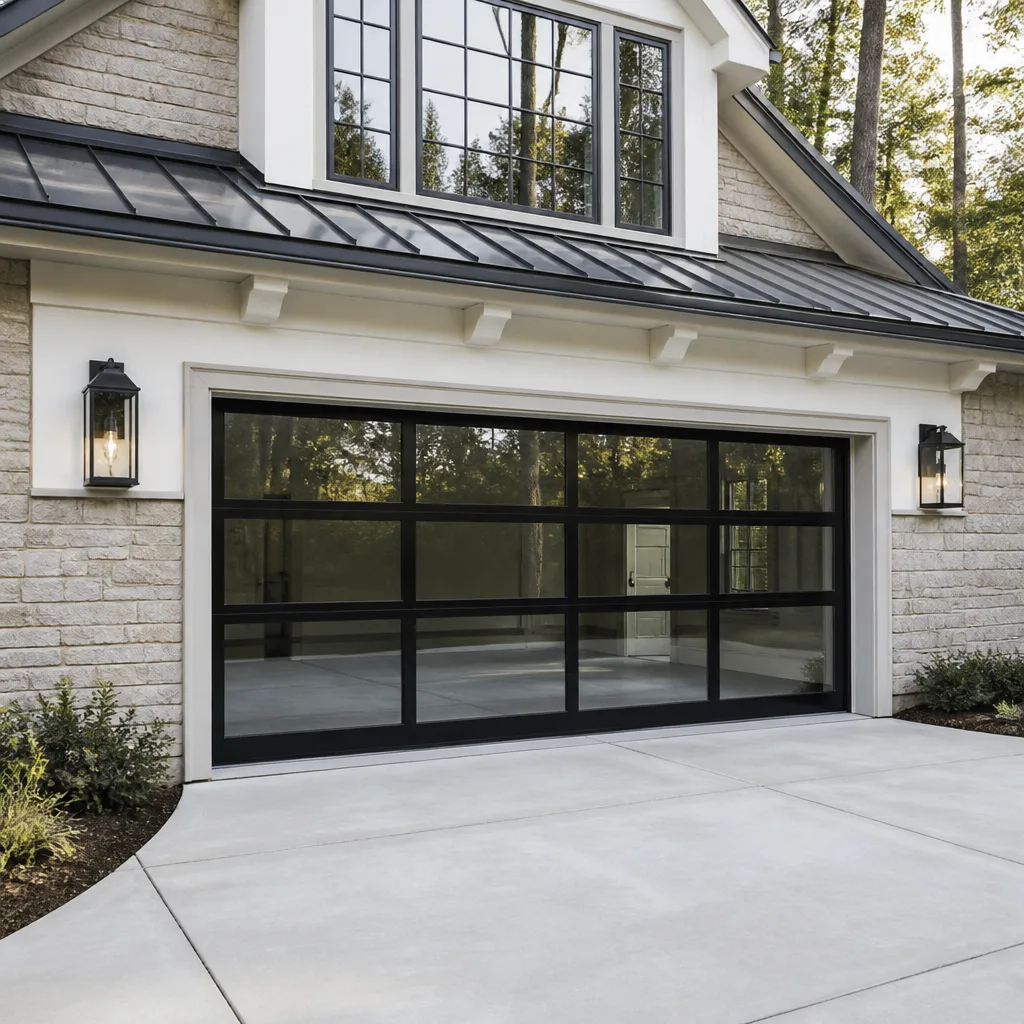 Full-view glass
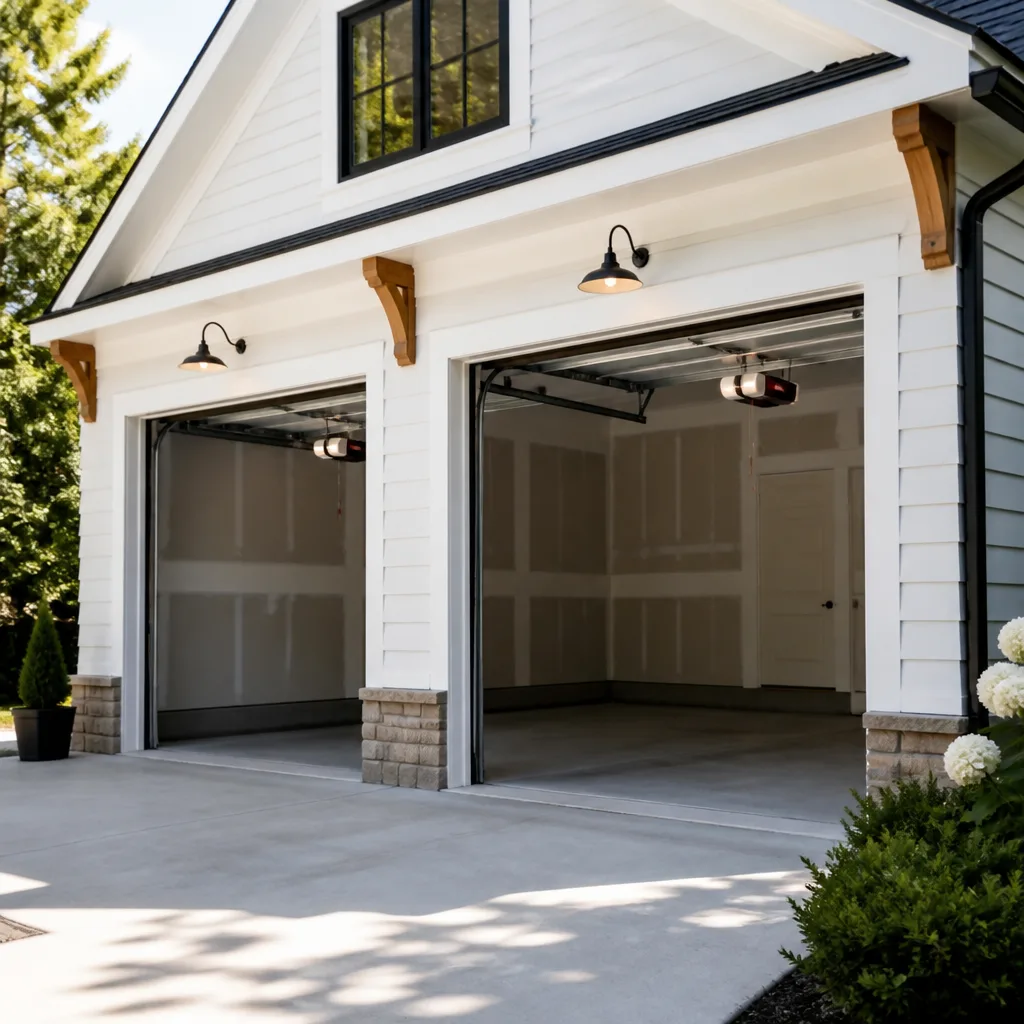 LiftMaster openers
 Chamberlain openers
Full 25-point door and opener safety check with every visit - springs, cables, rollers, tracks, and your LiftMaster or Chamberlain opener included
You get a price before we start. It does not change when the truck arrives.
Get your free estimateGarage Door Warning Signs: A Melbourne Homeowner’s Reference Guide
Most garage door warning sign articles start with grinding noises and slow operation. But by the time a Melbourne garage door is grinding, the real warning signs have been visible for months. The corrosion that starts on a spring in salt air, the hairline gap that opens between panels as sandy soil shifts beneath the slab, the slower lift that happens as an opener motor works harder against a weakening spring, those are the signals that arrive first. This guide teaches you to read the earliest physical signs on your door and opener, so you address problems before they strand your car in the driveway or leave a spring snapping at 7 a.m. on a workday.
Styles & brands we work with
Quick Answer
The earliest garage door warning signs in Melbourne are visual and environmental, not audible: rust forming on springs, cables, and roller stems, panel gaps that shift with the seasons, and an opener that takes noticeably longer to complete a full cycle. If you can see surface rust on any load-bearing component, hear a sharp bang from inside the garage, or spot a door that has started to drift closed on its own, call a garage door specialist before the component fails completely. A trained eye can catch these signs months before a breakdown, and most are inexpensive to address early.
Table of Contents
- Salt Air Corrosion: The Melbourne-Specific Sign That Comes First
- Panel Gap Patterns: Reading Foundation Shift vs. Hinge Wear
- When Your Opener Slows Down: A Dying Motor, Not a Quirk
- Misaligned Track vs. Bent Track: How to Tell Without Touching Anything
- The Manual Disconnect Test: What Your Door Tells You About Its Springs
- Cable Fraying and Wear: The Overlooked Failure Point
- Noise Signatures: What Different Sounds Actually Mean
- Seasonal Patterns in Melbourne: Why Problems Cluster After Storms
Salt Air Corrosion: The Melbourne-Specific Sign That Comes First
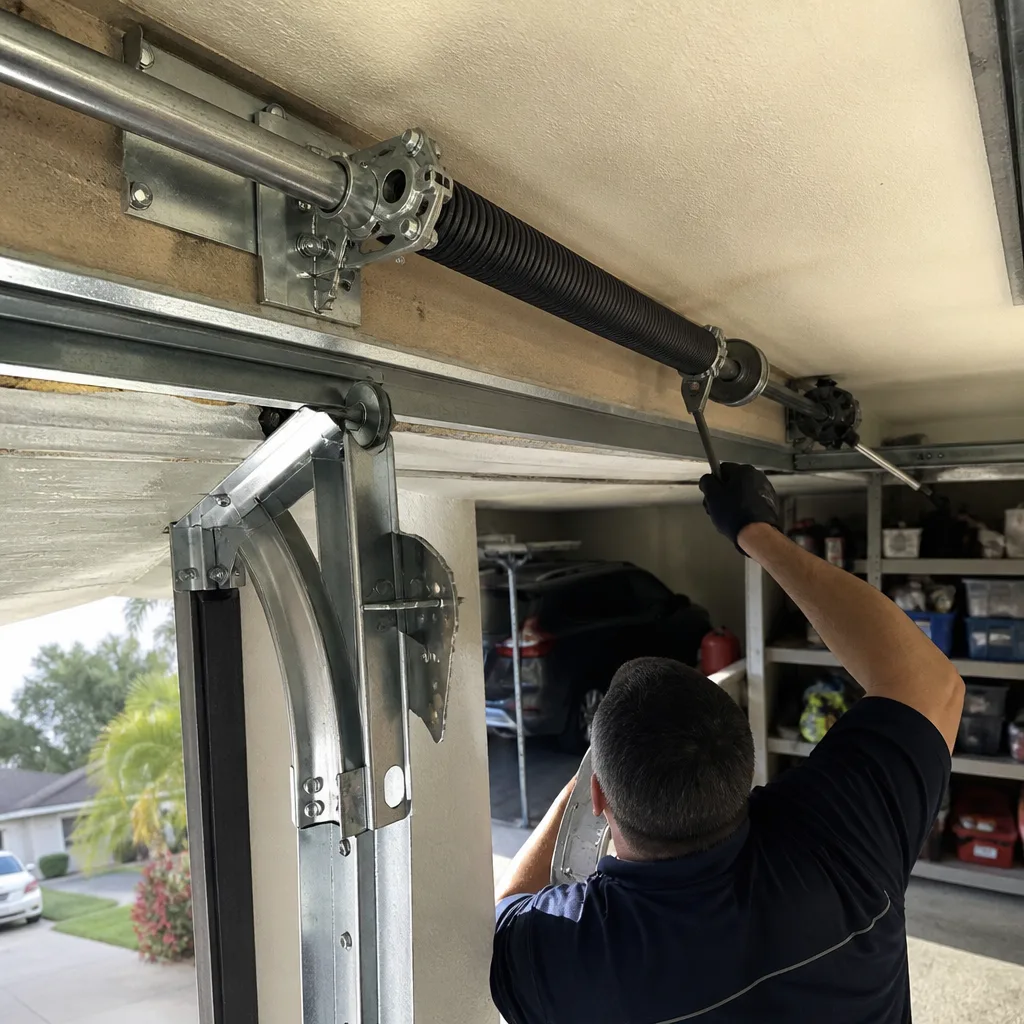
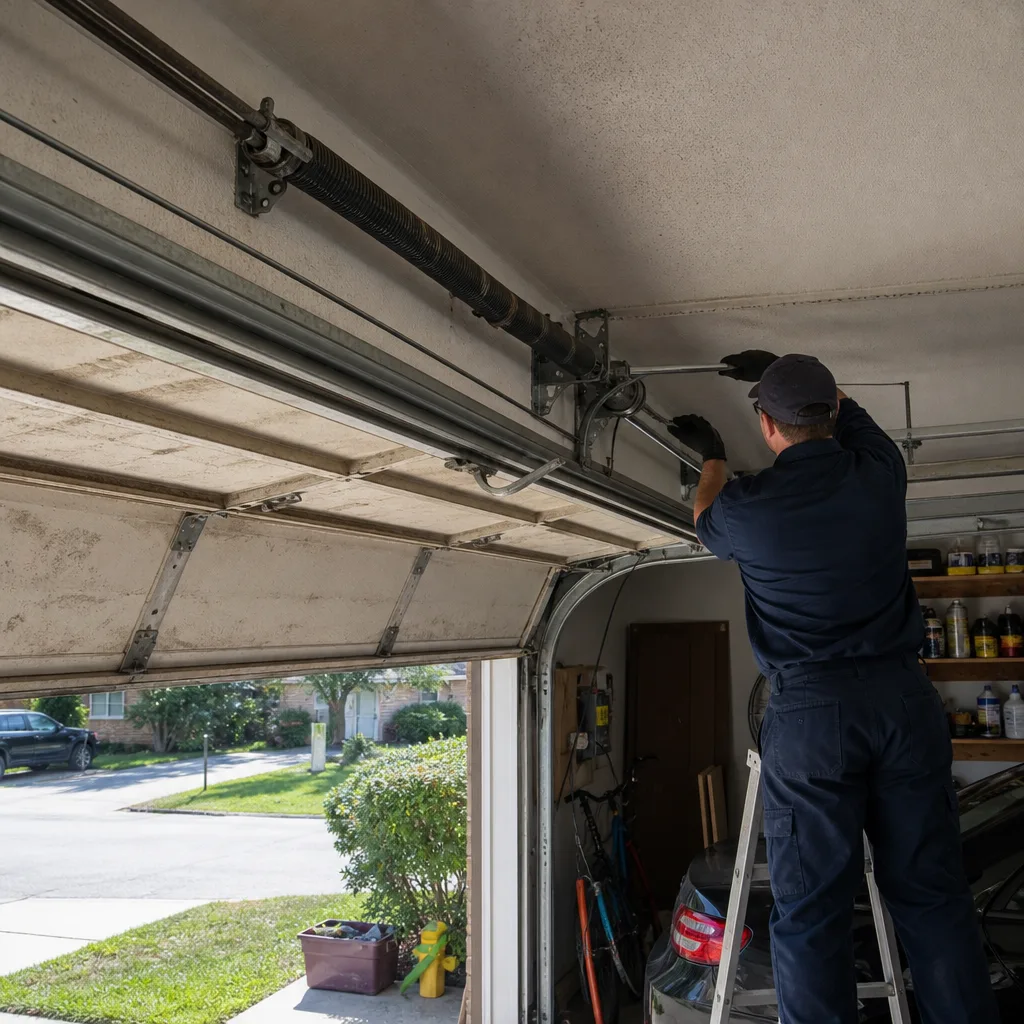
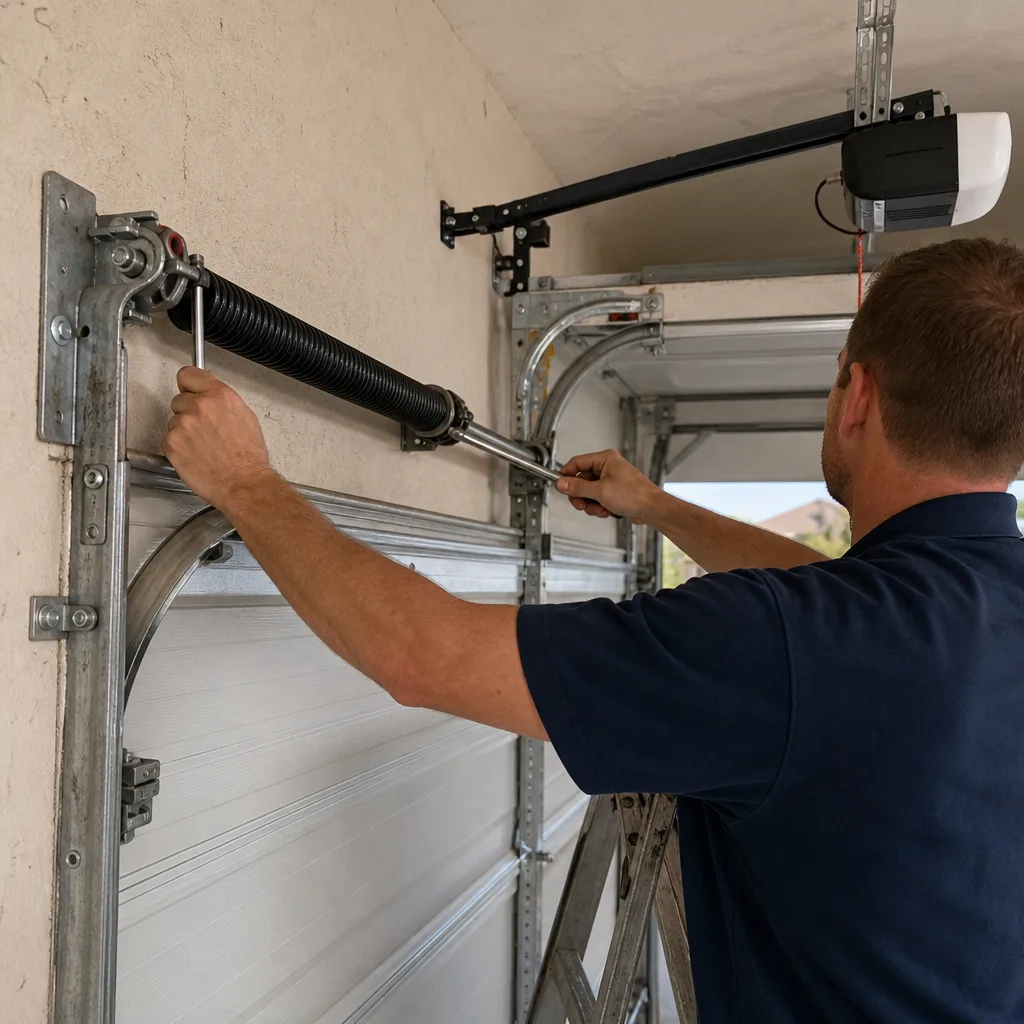
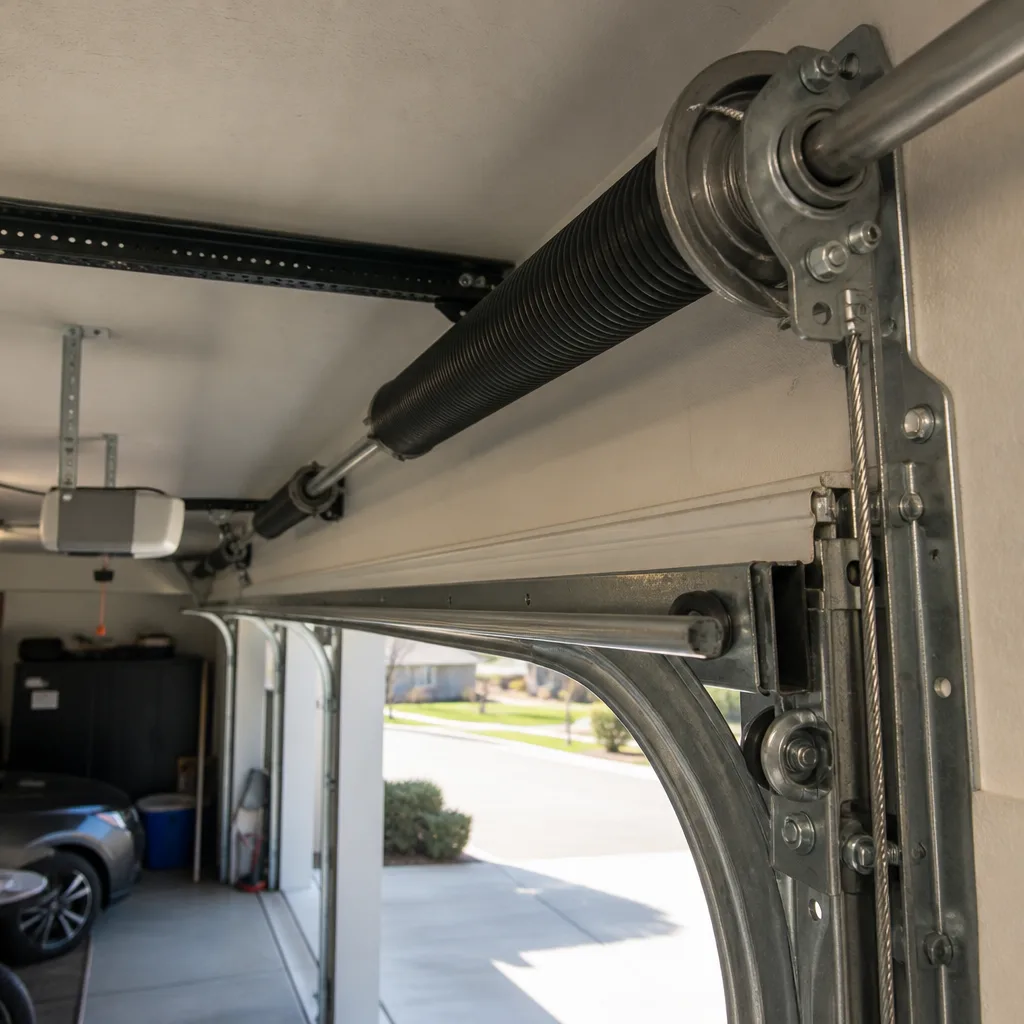
In Melbourne, the first real warning sign on a garage door is rarely a noise. It is rust. The combination of Atlantic salt air and high humidity means corrosion starts on metal components long before they fail, and that corrosion is visible if you know what to look for. A spring that is starting to rust will show a fine orange-brown dusting on the surface, often concentrated where the coils touch each other. That dusting is not cosmetic. Rust on a torsion spring creates microscopic pitting that weakens the metal, and every cycle of the door flexes that weakened steel. A spring with visible rust is a spring on a countdown.
Surface discoloration from humidity looks different from active corrosion. Humidity staining appears as a dull, uniform darkening or a light chalky film across the metal. It does not flake. Active rust, the kind that matters, has texture: it looks powdery or scaly, and if you run a dry finger over it (with the door closed and the opener disengaged), the rust will transfer. On cables, look for a dulling of the bright galvanized finish. A healthy cable on most doors has a clean, silvery sheen. A cable that has started to corrode looks brown or dark gray in patches, and those patches are where the individual strands begin to separate and break.
The roller stems are another early-warning spot. The stem is the metal shaft that connects the roller wheel to the hinge. In Melbourne’s coastal air, these stems are often the first components to show rust, because they sit in the track where salt-laden humidity pools. You can see the stems without touching anything: stand inside the garage, look along the vertical track, and inspect the stem just above the roller wheel. If the stem shows brown discoloration, the roller is no longer spinning freely. That added friction is transferred to the hinges, then to the panels, then to the springs. None of this happens overnight, which is why it pays to look once a season.
What we tell Melbourne homeowners is this: if you see rust on a load-bearing component – spring, cable, stem, mounting plate – do not wait for the noise. The noise is the failure, not the warning. The warning was the rust you can see today.
Panel Gap Patterns: Reading Foundation Shift vs. Hinge Wear
A garage door is a set of panels connected by hinges, and the gaps between those panels tell a story. The trick is knowing which story you are reading. In Melbourne, where sandy soil and seasonal rain can cause subtle slab movement, panel gaps often have nothing to do with the door itself. They have to do with the concrete under it.
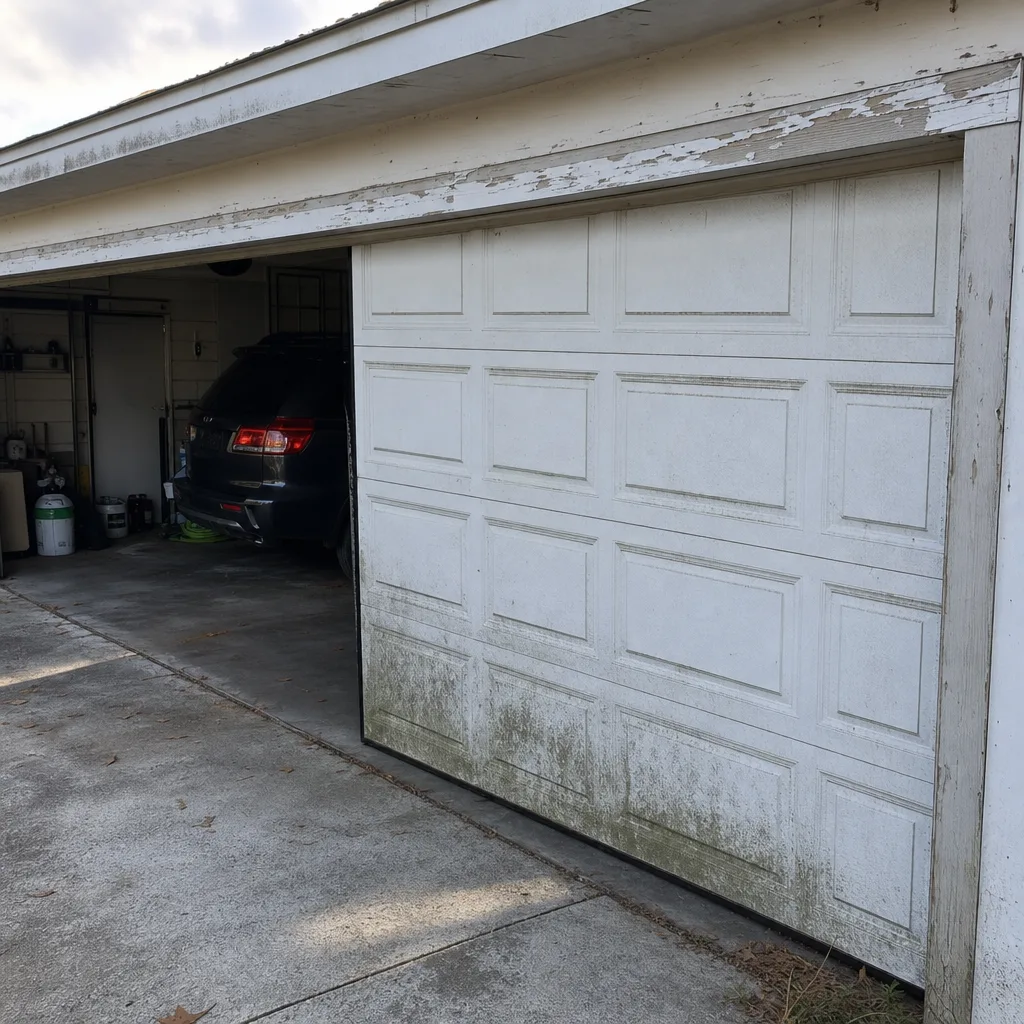
Foundation or slab movement shows a specific pattern: the gap between panels is wider at one end of the door and narrower at the other, and the pattern repeats consistently every time the door closes. If you look at the horizontal seam between the second and third panels and see a wedge-shaped gap that is wider on the left and nearly closed on the right, and that gap is the same every time, the door is racking. The slab has settled unevenly, and the door frame is no longer square. This is not a hinge problem, and no amount of hinge replacement will fix it.
Hinge wear shows a different pattern. Worn hinges produce gaps that are more uniform across the width of the door, or gaps that appear inconsistent from one cycle to the next. A hinge that is loose will let the panel sit slightly differently each time the door closes, and you’ll see the gap width vary. You may also hear a metallic chatter as the door moves, or see the panel wobble slightly as it transitions from the vertical track to the horizontal. These are distinct symptoms from the static wedge gap of foundation movement.
The practical difference matters. Foundation movement, common in Melbourne’s sandy soil zones, usually means the door needs a professional adjustment to the track alignment and possibly the installation of reinforcement struts on the affected panels. Hinge wear is a simpler fix: replace the hinge. But then, some hinge wear is aggravated by the same slab movement that causes racking. A Melbourne door on a moving slab will wear hinges faster, because every cycle torques the hinge slightly. If you see a wedge gap, have the door evaluated before you spend money on hardware that will wear out again.
When Your Opener Slows Down: A Dying Motor, Not a Quirk
A garage door opener that takes three extra seconds to open is not simply aging gracefully. It is telling you something specific, and in most cases the message is one of two things: either the motor is working against a failing spring and drawing more current than it was designed for, or the motor’s internal capacitor is degrading and producing less starting torque. Neither one is a quirk. Both are measurable, and both get worse.
Electric motors do not gradually lose speed for no reason. An opener motor spins at a fixed speed governed by its design. What changes is how hard it has to work to achieve that speed, and how quickly it reaches it. A slowing door means the motor is taking longer to spin up, because it is fighting mechanical resistance. The most common source of that resistance in Melbourne is a torsion spring that has lost tension or is near failure. As a spring fatigues, it provides less lifting assistance, and the opener compensates until it cannot. The “works fine but takes longer” stage is the compensation stage.
Here is the pattern to watch. Count how long the door takes to complete a full open cycle from fully closed to fully open. Do it three times over a week. If the time is consistently longer than it was six months ago, if the motor sounds like it is laboring, or if the opener’s light dims briefly at the start of the cycle, the system is under strain. A healthy door with a balanced spring opens in a consistent number of seconds, every time. A door with a weakening spring gets slower and slower as the weeks pass, and the motor runs hotter each cycle.
Opener motors on LiftMaster, Chamberlain, and Genie units are built to last, but they are not built to carry the entire weight of the door. That is the spring’s job. When the spring is failing, the motor becomes the load-bearer, and that shortens its life dramatically. If your door is getting slower, the fix is usually a spring replacement or a motor diagnosis, not a new opener you do not need yet. The repair-first approach means finding out which component is actually failing before replacing anything.
Misaligned Track vs. Bent Track: How to Tell Without Touching Anything
A door that runs rough or hangs up partway through its travel often points to the track. The question is whether the track is misaligned or bent. That distinction matters because misaligned track is usually an adjustment job, while a bent track means the metal itself is deformed and needs replacement. You can tell the difference without putting your hands on anything.
Misaligned track means the two tracks, the one on the left and the one on the right, are no longer parallel to each other or properly seated in their mounting brackets. The track itself is straight; it is just in the wrong position. The visual signature is a consistent gap between the roller and the track wall at a specific point, or a track that has visible clearance between its back and the garage wall where it should be flush. You may also see the track pulling away from a bracket, with a screw that has loosened. The door will typically bind at the same spot every time, and the sound is a steady scrape, not a clunk.
A bent track is different. The metal itself shows a visible crease, dent, or curve that should not be there. Look along the inside edge of the track with the door closed. A straight track runs in a clean line. A bent track will show a deflection, often accompanied by a kink in the metal or a spot where the track is compressed. The door may hang up at the bent point, or the roller may derail entirely. Bent tracks happen when something hits the track: a car bumper, a lawn mower, a heavy object that fell against it. They also happen in Melbourne when a storm blows debris into the door.
Do not attempt to straighten a bent track by hammering it or bending it back. The metal has already been stressed past its yield point, and working it cold creates a weak spot that will fail under load. A bent track is a replacement item. A misaligned track is an adjustment item, but the adjustment involves loosening and re-torquing bolts on a track that sits under spring tension. Unless you have training and the right tools, leave both to a specialist. The safe move is observation, then a phone call.
For homeowners dealing with any track issue, our Garage Door Repair in Melbourne page explains how we diagnose the full range of door and track problems.
The Manual Disconnect Test: What Your Door Tells You About Its Springs
There is one test that tells you more about your garage door’s spring health than any visual inspection, and it takes about sixty seconds. It is called the manual disconnect test, and every Melbourne homeowner should know how to do it. The test measures whether your springs are doing their job, which is to counterbalance the weight of the door so the opener only has to overcome a small fraction of it.
To perform the test:
- Close the garage door completely.
- Locate the red emergency release cord hanging from the opener rail, usually about chest height near the motor.
- Pull the cord straight down. This disconnects the door from the opener carriage. You will hear a click.
- Grip the door handle or bottom edge, and lift the door manually to waist height.
- Let go of the door.
Here is how to read the result. A healthy door with properly tensioned springs will stay at waist height without moving. It may drift an inch or two, but it will not drop or rise noticeably. The springs are counterbalancing the door’s weight, and the system is balanced. A door that slowly drifts downward means the springs have lost tension. A door that springs upward on its own means the springs are over-tensioned. Either condition is a problem, and either means the opener is working harder than it should.
If the door slams to the ground when you release it, do not attempt to lift it again. That is a failed spring, or a spring that has lost enough tension that the full weight of the door is now unassisted. The door is dangerously heavy, and the remaining spring is carrying a load it was not designed for. Leave the door closed and call a professional.
For an opener-specific view of spring and motor interaction, see our Garage Door Opener Repair in Melbourne page.
Cable Fraying and Wear: The Overlooked Failure Point
Cables are the unsung workhorses of a garage door system. They carry the spring’s lifting force to the bottom brackets, and they hold tension every moment the door is not fully open. When a cable fails, it does not give a long warning. The door drops, usually on one side, and the panel can crack on impact. That is why cable inspection is one of the highest-value habits a Melbourne homeowner can build.
Look at the cables with the door closed. The cables run vertically alongside the door on each side, from the bottom bracket up to the drum at the top. A healthy cable is clean and uniformly cylindrical. Signs of wear include protruding strands that look like tiny wires sticking out of the cable’s surface, a flattened or oval cross-section where the cable has been crushed against the drum, and rust staining as described earlier. In Melbourne, rust on cables is common enough that we treat any brown discoloration as a reason for replacement, not just monitoring.
Cables also wear at the drum, the spooled wheel at the top of the track where the cable wraps. If the cable has jumped the drum’s groove and is winding unevenly, you will see the cable stacked on one side of the drum instead of lying in its channel. This indicates a misalignment or a door that is out of balance. It also creates abrasion, because the cable rubs against itself as the drum turns.
The safety rule for cables is simple: they are under high tension, and they store enough energy to cause serious injury if they snap or if a person tries to handle them while loaded. Do not attempt to adjust, unwrap, or replace a garage door cable on your own. Observation is safe; intervention is not. If you see fraying, rust, or uneven winding, call a specialist before the cable becomes a casualty.
Noise Signatures: What Different Sounds Actually Mean
Noises are the warning signs most people notice first, but most people misread them. A garage door makes different sounds for different problems, and each one has a signature. Learning to distinguish them means you can describe the issue accurately over the phone and understand what the technician is telling you.
A rolling, clicking rhythm that corresponds to the door’s movement usually points to worn rollers. The roller wheel has lost its smooth surface or its internal bearings are failing, and the click is the flat spot hitting the track. This is a wear item, and replacement is straightforward. A grinding or raw metal-on-metal sound is more serious. It often means a roller has seized entirely and is scraping the track, or a hinge has worn through its bushing and is rubbing against the panel edge. Either way, the noise is telling you that mechanical parts are in contact in a way they should not be.
A sharp bang from inside the garage, like a gunshot or a heavy object dropped onto concrete, is the sound of a torsion spring breaking under load. This is the noise that terrifies people, and it should. The spring has snapped, the door’s weight is no longer counterbalanced, and the door cannot be opened safely by hand. If you hear this sound, do not open the door with the opener or by hand. Leave everything as it is and call a professional who carries replacement springs.
A squeal or high-pitched whine from the opener unit itself points to the opener’s internal drive mechanism, usually a worn gear on a chain-drive or screw-drive unit, or a failing motor bearing. A rattling that sounds like loose hardware can be exactly that, bolts that have backed out of the track brackets or hinge plates. Loose hardware is not always dangerous on its own, but it compounds. A bolt that is working its way out changes the geometry of the track and adds uneven load to every other component.
The lesson is that noise is information. None of these sounds should be ignored, but none of them should be guessed at either. If you are hearing something new, describe it accurately to whoever you call. The right specialist can usually estimate the likely cause from your description before they arrive.
If you are dealing with an opener-specific sound and suspect the drive system, our Garage Door Opener Repair in Melbourne page covers the diagnostic process for opener motors, gears, and controls.
Seasonal Patterns in Melbourne: Why Problems Cluster After Storms
Garage door failures in Melbourne do not distribute evenly across the year. They cluster. The pattern follows the weather, and understanding it helps you schedule preventive maintenance at the right time and recognize why your door behaves differently from season to season.
The highest cluster of calls we see follows summer storm season. A Melbourne thunderstorm brings wind gusts that push against the door face, and a door that is already under spring tension feels that force as a lateral load. The result is often a derailed roller or a cable that jumps its drum. The next cluster is in late summer and early fall, when sustained humidity has had months to work on exposed metal. Springs that were marginal in the spring become failures in September. The salt air never stops working.
Winter brings a different pattern. Cool mornings cause metal to contract slightly, and doors that were borderline in the summer sound louder and run rougher. Lubrication thickens, and rollers that were quiet in August start to chatter in January. None of this is catastrophic on its own, but it compounds on systems that are already worn.
The practical takeaway is this: inspect your door’s load-bearing components twice a year, once before storm season and once after the humidity peaks. Fifteen minutes of looking at springs, cables, and roller stems will catch corrosion before it becomes failure. And if you see something you cannot identify, call someone who can. The earlier a Melbourne door is evaluated, the more likely it is to be a repair, not a replacement.
Common Mistakes to Avoid
- Ignoring surface rust because the door still works. Rust on a spring or cable is a failure in progress. The door will work until the moment it does not, and that moment is often a snapped spring or a dropped door. Address rust the moment you see it.
- Spraying lubricant on a grinding noise without finding the cause. Lubricant silences the symptom temporarily while the underlying wear continues. A grinding roller is a roller that has already failed; oiling it just masks the sound until the failure gets worse.
- Assuming a slow opener is just an old opener. A slow door is usually a failing spring, not a failing motor. Replacing the opener without checking the spring wastes money and leaves the new opener carrying the same excessive load.
- Pulling the emergency release while the door is open. The red release cord exists for when the door is stuck closed, not for casually disconnecting an open door. Releasing an open door with a broken spring can cause the door to come down uncontrolled. Only disconnect the door when it is fully closed.
- Hammering a bent track back into shape. Bending metal back to its original position weakens it at the bend point. A bent track is a replacement part, not a repair job. If you try to straighten it yourself, you are creating a future failure point.
- Waiting for a noise before calling a professional. In Melbourne, the earliest warning signs are visual. By the time a door is making a new noise, a component is already well into its failure sequence. Train yourself to look, not just listen.
- Checking only the door panel and ignoring the hardware. The panel is the most visible part of a garage door system, but it is rarely the first thing to fail. Springs, cables, rollers, and hinges carry the load. Inspect them first.
When to Call a Professional
Some garage door problems announce themselves. A snapped spring is not ambiguous. But the earlier signs are more subtle, and deciding when to call matters because the cost difference between early intervention and failure is significant. Call a professional if you see any active rust on a spring, cable, or roller stem. Call if your door drifts down during the manual disconnect test, or if it slams shut when released. Call if the door is taking noticeably longer to open than it did a few months ago. Call if you see frayed cable strands or uneven cable winding at the drum. Call if the track shows a bend, a kink, or a gap between the track and the wall. And call if you hear a new noise you cannot identify.
Steel under tension is not forgiving of guesswork. The springs and cables on a garage door store enough energy to cause serious injury, and the safest decision in almost every case is to leave diagnosis and repair to someone trained for it. Ironstone Garage Door Repair home offers free estimates in Melbourne. Call (866) 472-4163 and describe what you are seeing and hearing. We will tell you over the phone what is likely going on and what it will cost to put right.
Frequently Asked Questions
The first signs are visual: surface rust on the spring coils, a door that drifts downward when manually disconnected, or an opener that is taking longer to complete a cycle. Rust is the earliest and most common sign in Melbourne’s humid, salt-laden air, and it appears long before a spring makes any noise. If the spring looks rusty or the door cannot hold itself at waist height during the manual disconnect test, call (866) 472-4163 for an evaluation.
A misaligned track is straight but positioned incorrectly, showing consistent gaps between the roller and track wall or between the track and the garage wall. A bent track has a visible crease, dent, or curve in the metal itself. Misaligned track can often be adjusted, while a bent track needs replacement. Do not attempt to straighten a bent track yourself; the metal has already been structurally compromised.
A garage door that opens more slowly than before is usually a failing spring, not a normal sign of aging. As the spring loses tension, the opener motor works harder to lift the door, and the cycle time increases. This is a measurable change. If your door is taking three or more extra seconds to open, have the spring and opener evaluated before the spring fails and strands the door.
No. Garage door cables are under high tension at all times except when the door is fully open, and they store enough energy to cause serious injury if they release while being handled. Cable replacement requires releasing spring tension safely, which is a job for a trained specialist with the right tools. If you see fraying or rust on a cable, call a professional.
It means the springs are no longer counterbalancing the door’s weight, and the full weight of the door is unassisted. This is a failed or severely weakened spring, and the door should not be operated until it is repaired. Leave the door closed and call (866) 472-4163 for immediate spring service.
Twice a year, once before summer storm season and once after the humidity peaks in early fall. Melbourne’s coastal environment accelerates corrosion, and an inspection that catches rust on a spring or cable in the spring can prevent a failure in September. Each inspection should focus on springs, cables, roller stems, and track condition.
The Bottom Line
Garage door problems in Melbourne announce themselves early, but rarely audibly. The warning signs that matter most are visible: rust on springs and cables, wedge-shaped panel gaps that point to foundation movement, and an opener that is losing speed as it compensates for a failing spring. Learn the manual disconnect test and perform it twice a year. When you see something you cannot explain, call a specialist who works on your specific brand and knows what Melbourne’s climate does to garage door hardware. Early intervention turns most failures into simple repairs, and the alternative is a door that fails when you least want it to.
Written by the team at Ironstone Garage Door Repair, serving Melbourne since 2016.
See the difference
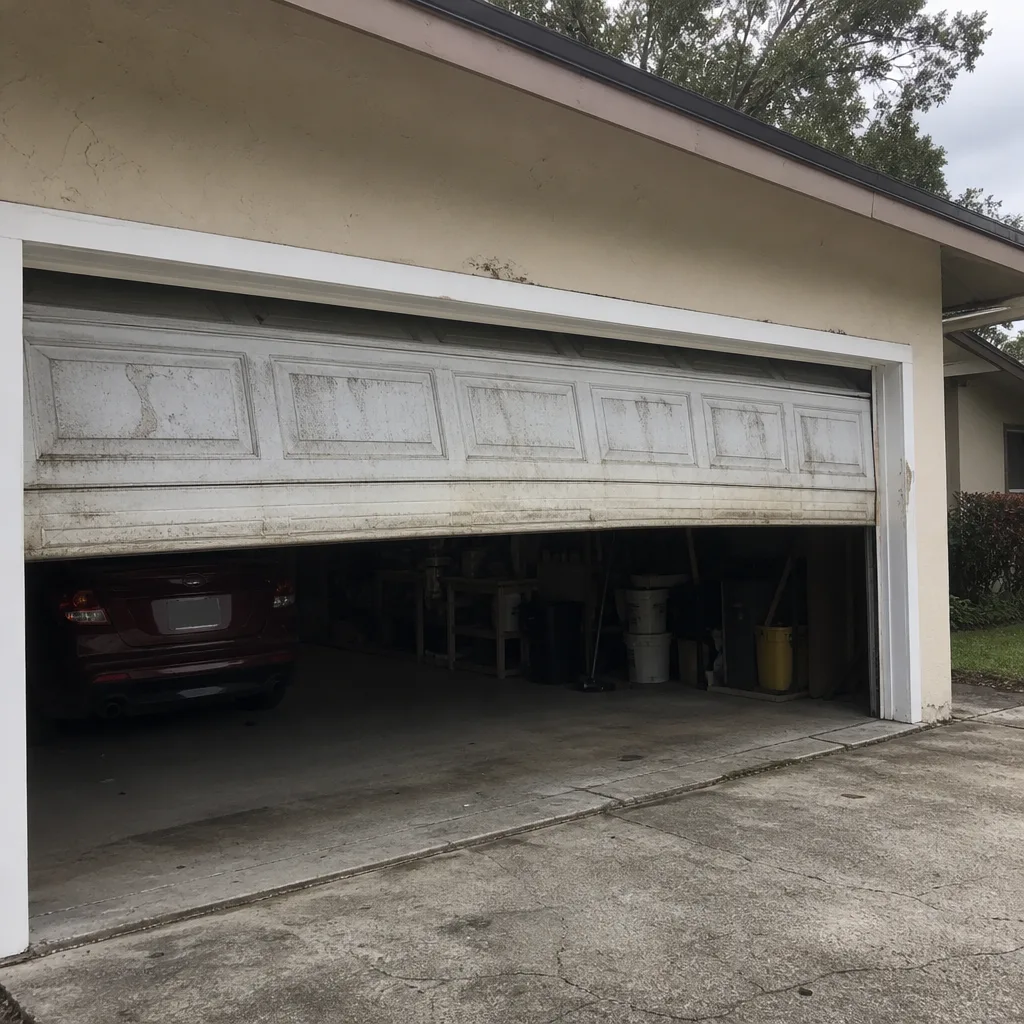 Before
 After
 Before
 After
 Before
 After