
Last updated October 30, 2026
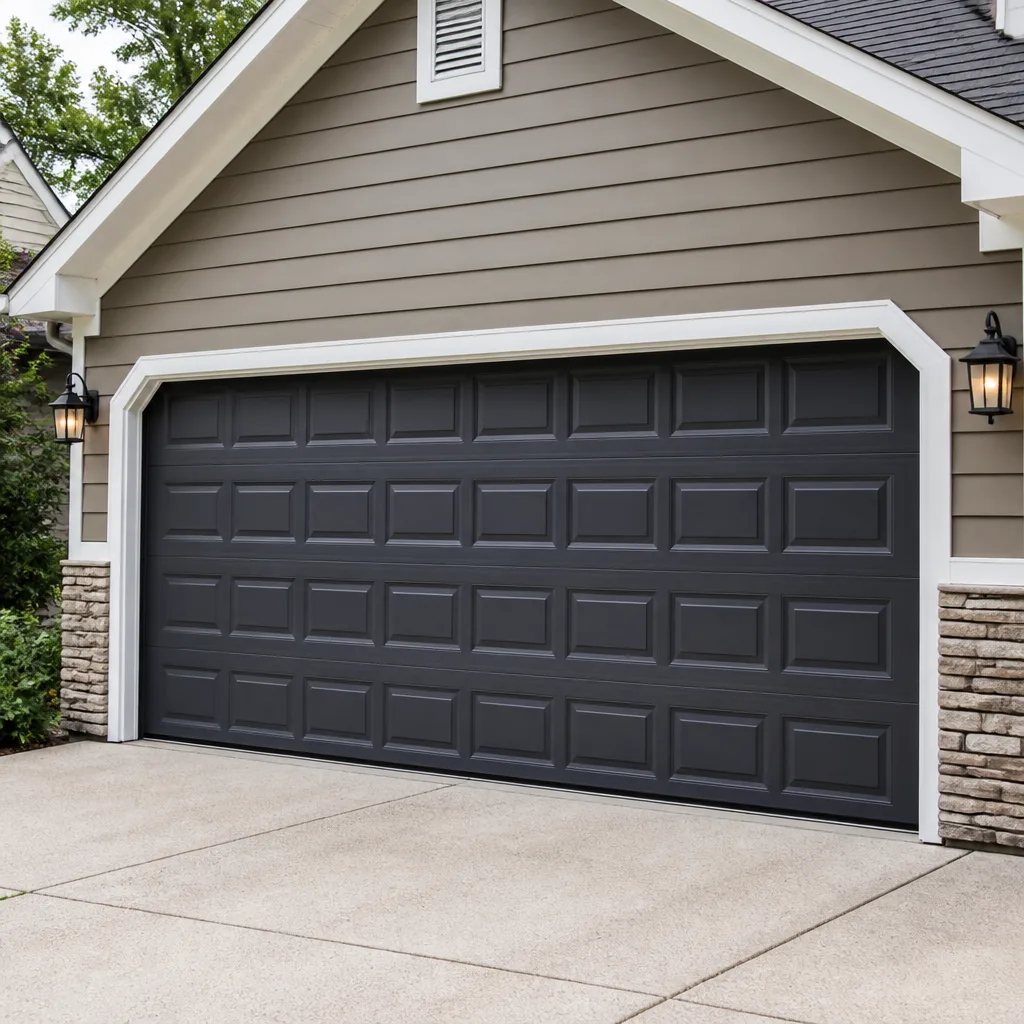 Raised-panel steel
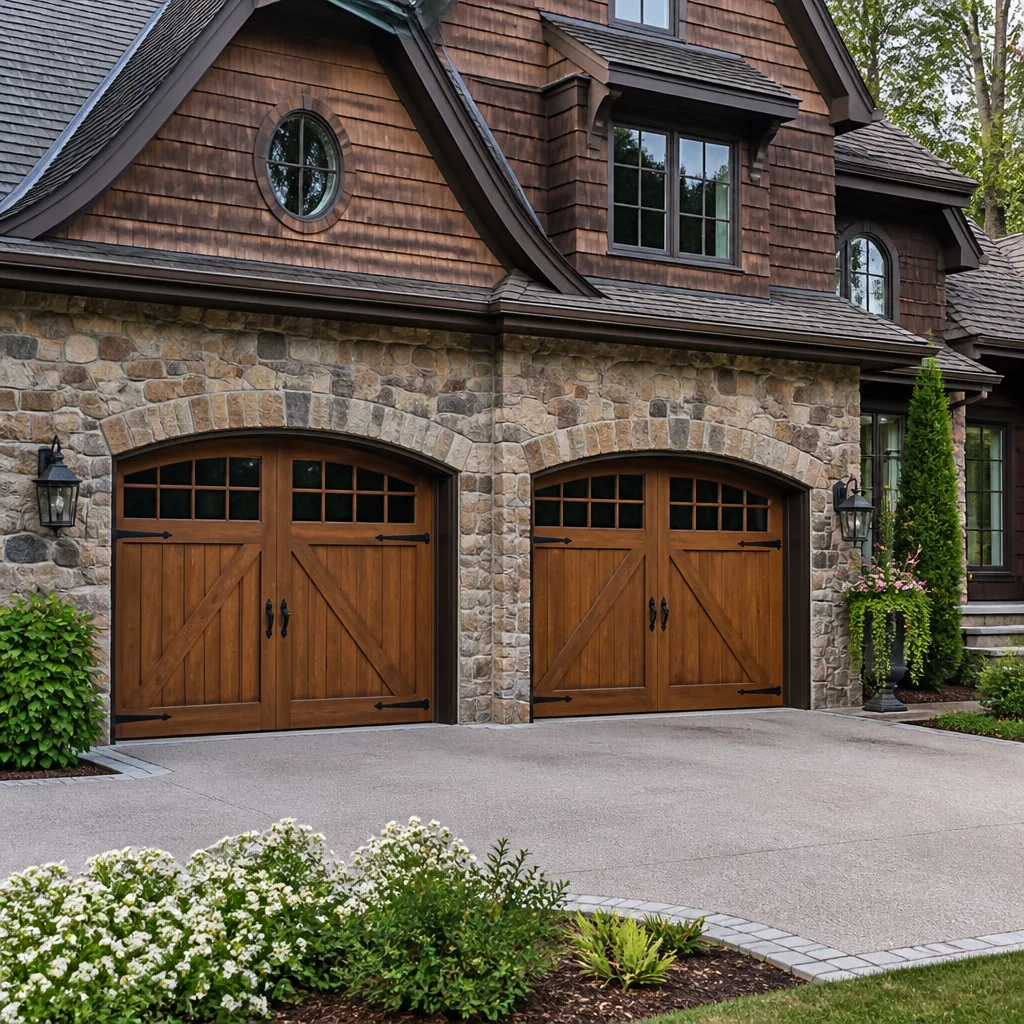 Carriage house
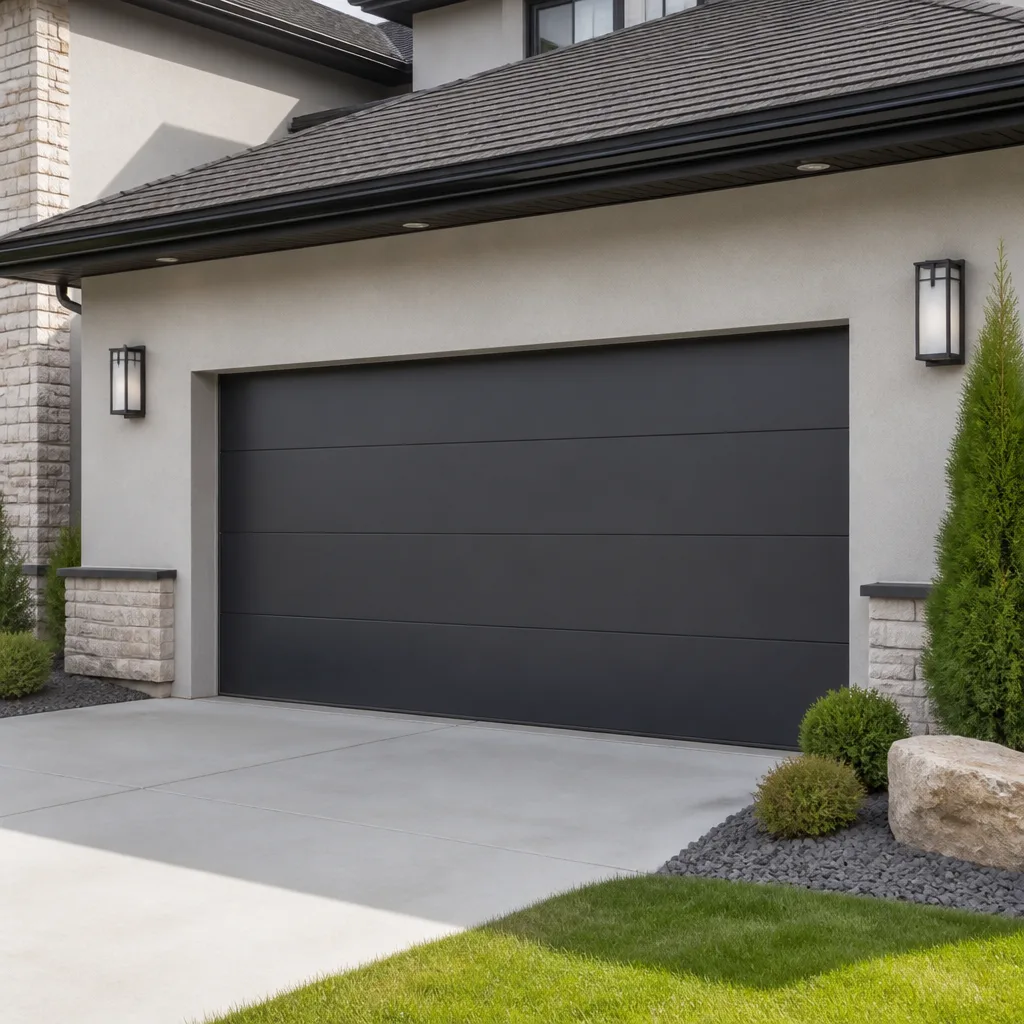 Modern flush
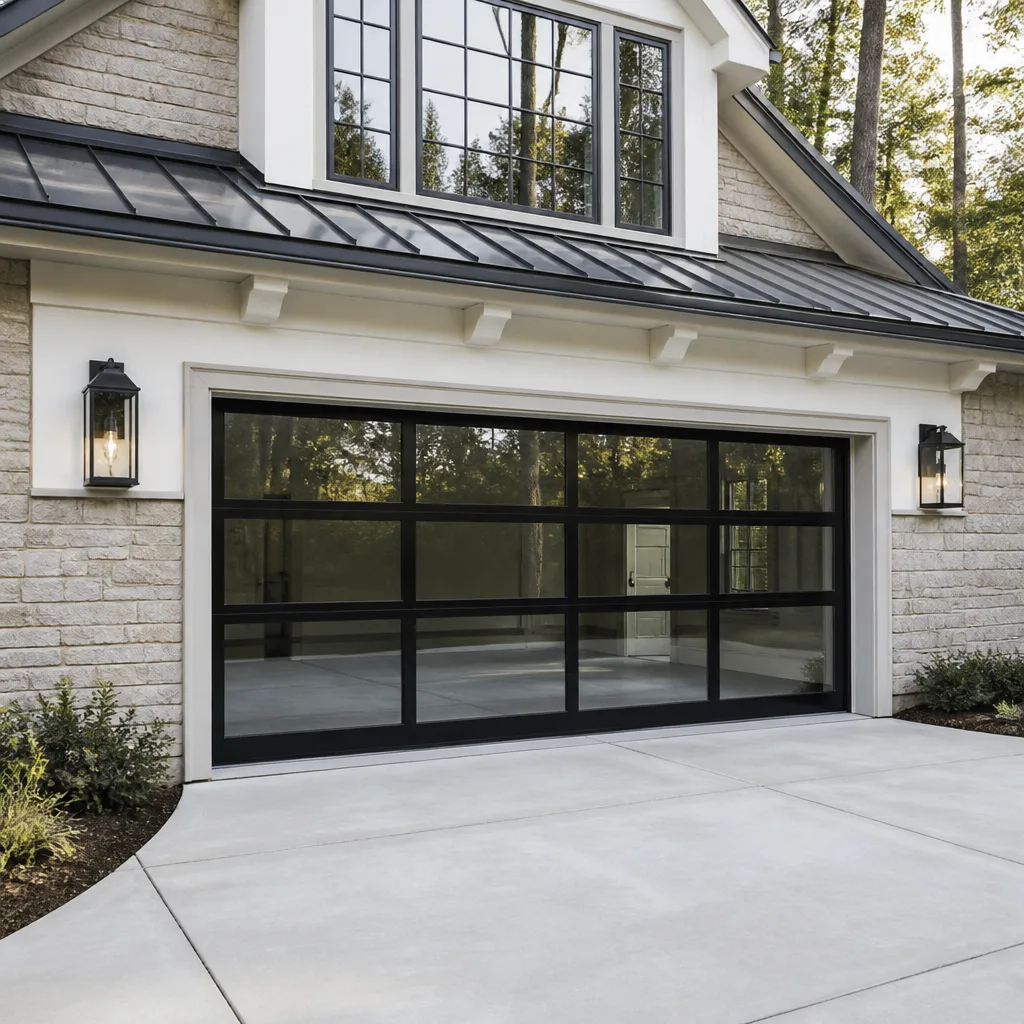 Full-view glass
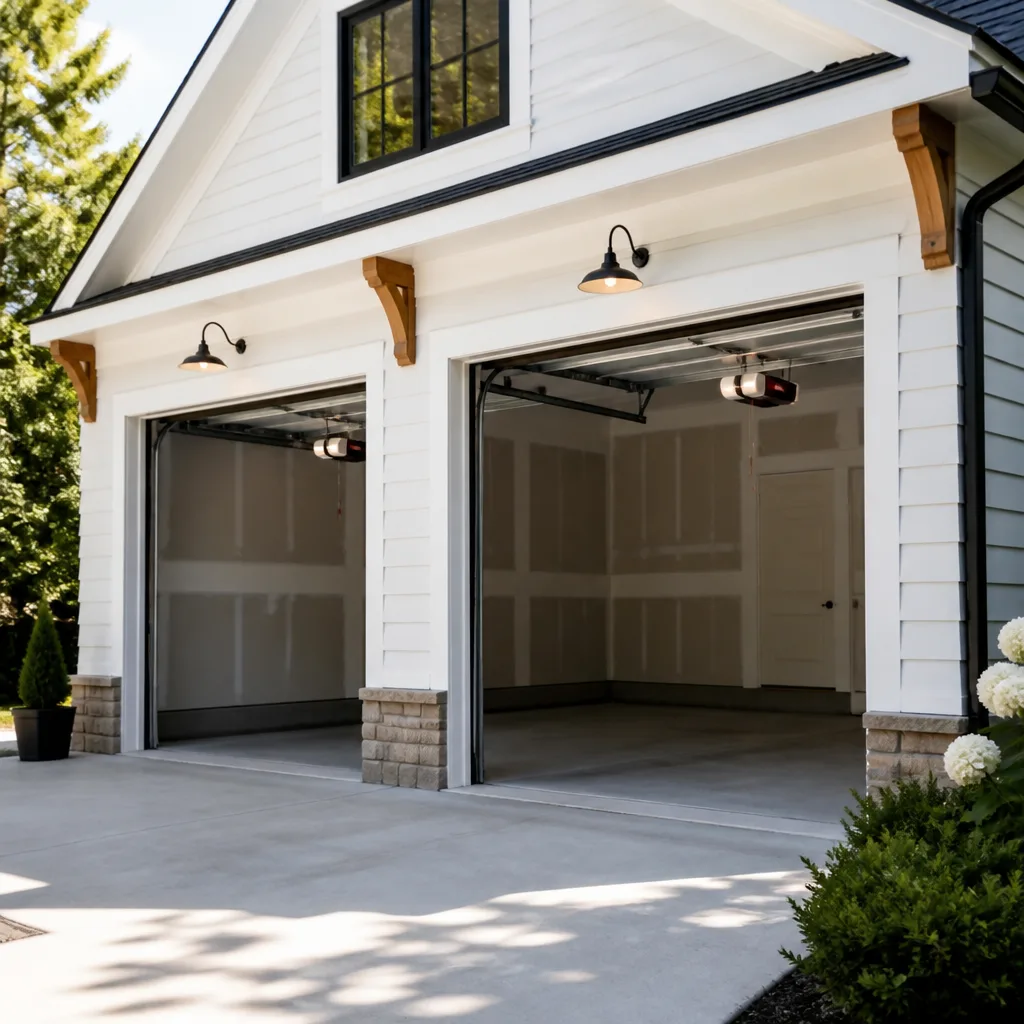 LiftMaster openers
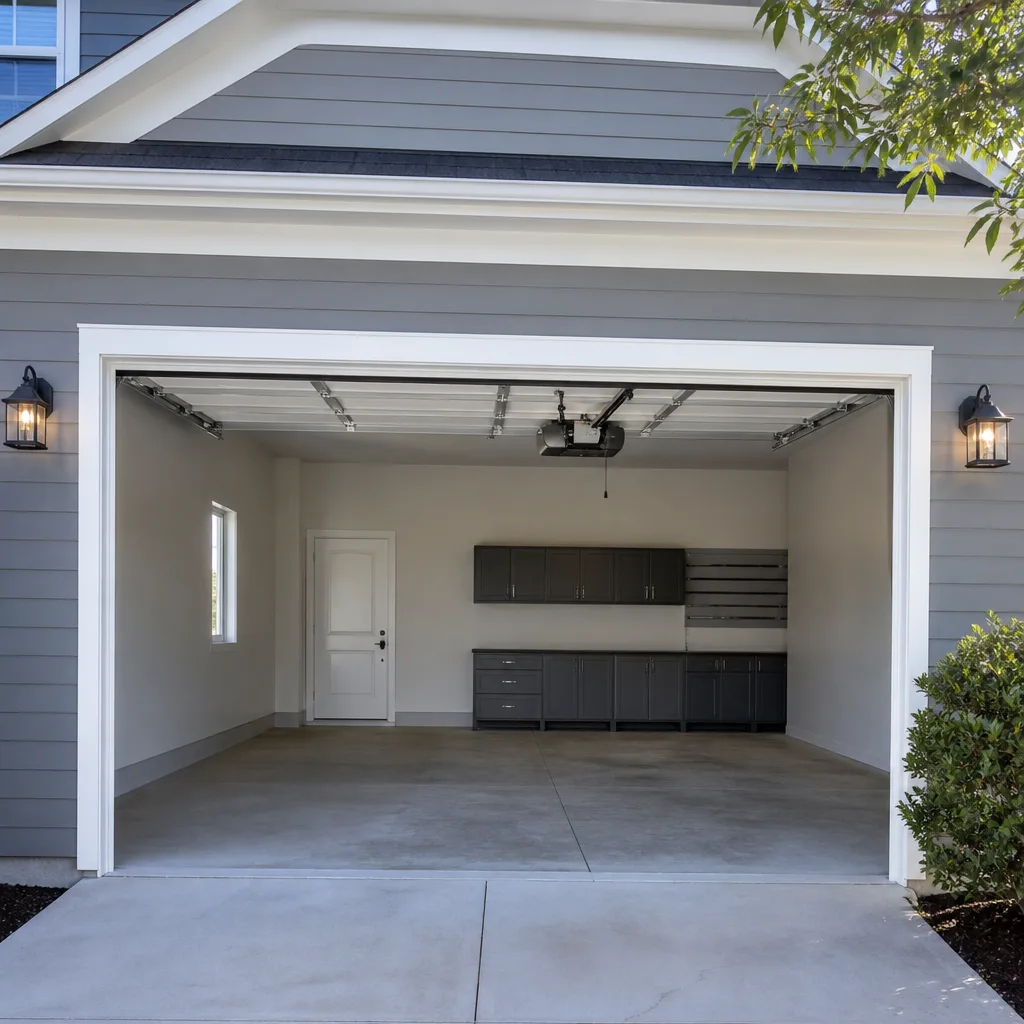 Chamberlain openers
Full 25-point door and opener safety check with every visit - springs, cables, rollers, tracks, and your LiftMaster or Chamberlain opener included
You get a price before we start. It does not change when the truck arrives.
Get your free estimateGarage Door Emergency Preparedness Guide for Melbourne Homes
After a hurricane passes through Melbourne, the most common reason homeowners can’t get their car out isn’t a broken door. It’s a perfectly functioning door with a dead opener and a manual release cord that’s never been pulled. That red cord hanging from the track is a ten-second solution most people only learn about after they’re already stranded in their driveway with a dead battery and a closed door. This guide covers the emergency scenarios that actually happen in Melbourne, Florida, from post-storm power outages to wind-damaged panels, and points you to more detailed troubleshooting steps when you need them. You’ll learn what to do before the storm arrives, what you can safely handle yourself afterward, and when the right move is to step back and call a specialist who works on your specific door and opener system.
Quick Answer
Garage door emergency preparedness in Melbourne means knowing three things before the next storm: how to pull the manual release cord without the door dropping, how to lock the door mechanically before high winds arrive, and what to inspect in order after the storm passes. This guide covers each step, including the specific mistakes that cause injuries and the Melbourne-specific failure modes that high humidity and hurricane-force gusts accelerate. For a printable reference, see our Garage Door Repair Maintenance Checklist for Melbourne Homeowners.
Styles & brands we work with
Table of Contents
- How to Safely Use the Manual Release Cord During a Power Outage
- Pre-Storm Protocol: Locking Your Garage Door Manually
- What to Do When a Garage Door Comes Off Its Tracks After a Storm
- Securing a Garage Door with a Damaged Bottom Panel
- The 24-Hour Post-Storm Inspection Sequence
- Melbourne-Specific Failure Modes: What Humidity and Hurricanes Do
- Common Mistakes to Avoid
- When to Call a Professional
How to Safely Use the Manual Release Cord During a Power Outage
Every automatic garage door opener has a manual release mechanism, usually a red cord hanging from the trolley on the opener rail. Pulling it disconnects the door from the opener carriage so you can lift the door by hand. The mistake that causes injuries and property damage in Melbourne homes happens when a homeowner pulls that cord while the door is in the fully raised position. The door is under spring tension, but if the spring is old, fatigued, or has been improperly adjusted, disconnecting the opener at that moment can send the door crashing down without warning.
Here is the safe sequence, in the order that matters:
- Confirm the door is fully closed. Never pull the release cord while the door is raised unless you have physically secured the door with locking pliers on the track just below a roller. We’ve seen the aftermath of this one too many times in the neighborhoods off Eau Gallie Boulevard.
- Locate the red release cord. It hangs from the center rail of the opener, roughly above where your hood sits when the car is parked inside.
- Pull straight down firmly. You’ll hear a click as the carriage releases from the chain or belt. The door is now in manual mode.
- Lift using the handle, not the top edge. A balanced door should lift with roughly 8 to 12 pounds of force. If it takes significantly more, the springs are not doing their job and the door should not be forced.
After power returns, you reconnect the opener by running the opener once. The carriage will re-engage automatically on most LiftMaster and Chamberlain models. If you have a Craftsman or Raynor opener, the re-engagement may require a second pull of the cord or a press of the wall button while the carriage is aligned. These brand-specific differences are why knowing your opener model matters when you’re standing in a dark garage after a storm.
Melbourne’s post-hurricane outages can stretch for days, which means your garage door in manual mode becomes your primary access point. A door that fights you, binds, or drops unevenly in manual mode signals a spring or track problem that existed before the storm and is now exposed. That’s a repair call, not a technique problem.
Pre-Storm Protocol: Locking Your Garage Door Manually
When high winds hit a closed garage door, the pressure can push the door inward. Your opener motor is not designed to resist that force. The gears inside the opener, especially older Genie and Chamberlain models, will strip before they hold back hurricane-force gusts. The wind then has a clear path into the garage, and once the garage door gives way, the roof often follows. This is a well-documented failure pattern in Florida construction, and Melbourne homes built before the 2002 Florida Building Code update are the most exposed. If you’re unsure whether your installation meets current standards, read our guide on Garage Door Permits, Codes & Inspections in FL: What You Need to Know.
What most Melbourne homeowners don’t know is that their garage door already has a mechanical lock built in, separate from the opener. It’s called a slide bolt or a manual lockdown, and on doors without one, a simple set of locking pliers clamped on the track achieves the same result.
Here is the pre-storm sequence we recommend, working from the inside:
- Close the garage door fully using the opener.
- Slide the manual slide lock into place if your door has one. This is a small metal bolt on the inside of the door that slides into a hole in the track. You may never have used it. It exists for exactly this scenario.
- If no slide lock, clamp locking pliers on the vertical track directly below a roller. Do this on both sides. The pliers physically block the door from lifting, which means wind pressure cannot ride the door up the track.
- Once the door is physically secured, unplug the opener. This prevents the opener from attempting to operate against the lock and stripping its internal gears.
After the storm passes, reverse the sequence: plug the opener back in, remove the pliers or slide the lock open, and test the door. If the opener hums but the door doesn’t move, the gears may have already stripped before you unplugged it. In that case, the door is safe to operate manually until an opener repair in Melbourne can be scheduled.
This simple pre-storm ritual takes under five minutes and it is the single highest-impact thing you can do to protect your garage, your car, and the rest of your home from wind pressure.
What to Do When a Garage Door Comes Off Its Tracks After a Storm
A door off its tracks looks scary, and in many cases it is. The rollers, the cables, and the springs are all under tension, and the door itself can weigh between 150 and 400 pounds depending on the material and size. Before you touch anything, take a breath and assess whether this is a safe DIY recovery or a call for a specialist.
Safe to inspect yourself:
- The door is off the track on one side only, with the other side still engaged.
- Both cables are still attached to the bottom brackets, and the springs look intact.
- The door is resting on the floor, not hanging at an angle above the car.
Not safe to touch, and here is when you stop:
- The torsion spring above the door is visibly broken, with a gap in the coil.
- A cable is snapped and dangling, or one side of the door is noticeably lower than the other.
- The door is hanging freely above the floor, supported only by one set of rollers.
That last scenario is the dangerous one. A door with a broken cable or spring can come down hard and fast, and no amount of upper body strength stops 300 pounds of steel. If the door has come off its tracks and one or both springs are still wound, the safest course is to leave the garage, close the door to the house, and call a garage door specialist. Homeowners in Melbourne call us frequently after named storms with doors that are half-on, half-off, and the most useful thing we can tell them over the phone is: don’t pull the red cord, don’t climb a ladder near it, and don’t try to muscle it back onto the rail.
If the door is off the track but resting on the floor with intact springs and cables, you can sometimes guide the roller back into the track with a flathead screwdriver. This is only the case when the bottom rollers on one side have slipped off a curve in the track. Straightening a bent track, however, is never a hammer-it-out job. Bent vertical tracks must be replaced or professionally straightened, or the door will bind every time it runs.
For garage door repair in Melbourne, the rule after any storm is: assess first, act second, and never fight tension.
Securing a Garage Door with a Damaged Bottom Panel
Flying debris during a hurricane can punch a hole in the bottom panel of a garage door, and that hole becomes a liability the moment the wind shifts. It lets rain in, it gives wind more surface area to grab, and it leaves your garage exposed to anything from salt air to raccoons to a neighbor’s loose fence board. Getting a replacement panel ordered and installed takes days, sometimes weeks after a major storm. In the meantime, you need a temporary seal that holds up for at least a few days in Melbourne’s humidity and afternoon thunderstorms.
Here is a temporary method that works, using materials from any hardware store:
- Plywood or heavy plastic sheeting cut to cover the hole with at least four inches of overlap on every side.
- Attach from the inside using self-tapping screws into the door’s interior framing. If the panel is foam-core, use large washers to prevent the screws from pulling through.
- Seal the edges with exterior-grade duct tape or flashing tape. In Melbourne’s humidity, ordinary masking tape fails within hours. You need something designed for roof or window flashing.
- Trim the exterior side flush and add a weather strip along the bottom edge if the damaged area includes the bottom seal.
This is not a fix. It’s a bandage that keeps the garage dry and the door panel from tearing further while you wait for parts. The important thing is that you do not operate the door with this patch in place unless absolutely necessary. A temporary patch changes the door’s weight and balance, and an unbalanced door puts stress on the springs and opener in ways they were never designed to take.
When we assess storm-damaged panels in Melbourne, the first question is whether the door is a common size and brand that we can source quickly. Garage door installation in Melbourne for full replacements is sometimes the faster path when a single panel for an obscure or discontinued model is backordered. That’s a conversation worth having early, not after a week of waiting.
The 24-Hour Post-Storm Inspection Sequence
After the storm has passed and power is back, or even before power is back, walk through this sequence in order. It is ordered deliberately: structure first, electrics last. Testing an opener before confirming the door itself is sound is the most common post-storm mistake we see in Melbourne homes.
- Visual structure check from inside. Stand inside the closed garage and look at the door panels, the horizontal and vertical tracks, the spring system, and the cables. You’re looking for obvious breaks, bends, or loose hardware. Do this before touching anything.
- Manual balance test. With the opener still disengaged or unplugged, lift the door by hand about waist high and let go. It should hold position or move slightly. If it drops quickly or climbs on its own, the springs are the culprit, and the opener is not the problem.
- Track and roller check. With the door in the raised position, run a finger along the vertical track on both sides. You’re feeling for gaps, bends, or debris. Melbourne storm debris tends to be palm fronds and shingle granules, both of which jam track openings surprisingly effectively.
- Bottom seal inspection. With the door closed, look along the bottom edge from inside. Light coming through anywhere means water has been coming through too. A torn bottom seal after a storm is common, and it’s a cheap part to replace before you worry about anything else.
- Electrical test last. Only now, plug the opener back in and test a full cycle, from closed to open and back. Listen for grinding, strain, or a humming sound without movement. These are opener problems separate from the door itself.
This sequence takes about ten minutes. Homeowners in Melbourne who follow it catch small issues before they become big ones, and they avoid the specific frustration of replacing an opener when the real problem was a bent track or a tired spring all along.
Melbourne-Specific Failure Modes: What Humidity and Hurricanes Do
Melbourne’s climate does two distinct things to garage door systems, and neither one shows up in generic garage door advice. First, high year-round humidity accelerates rust on hardware and weakens torsion springs through constant micro-corrosion. A spring that would last eight years in a dry climate may fail at year six here, and the failure often comes not during a storm but a week after it, when the door has been cycled manually more times than usual. Second, the salt air from the Atlantic does a number on unpainted steel components, especially the bottom brackets and cable ends, which rust faster than any other part.
We’ve seen specific patterns across Melbourne neighborhoods. In the beachside communities, the failing component is often the cable end at the bottom bracket, eaten through by rust and then snapped by a single hard close. In the inland subdivisions, where homes sit lower and drainage runs through backyards, the failing component is more often the opener’s logic board, shorted by a power surge during a lightning-heavy storm. Homes with LiftMaster and Chamberlain openers tend to hold up better against surge damage than older model Raynor and Wayne Dalton units, not because of brand quality but because the newer models have built-in surge protection that the older ones simply predate.
None of this requires that you become a garage door engineer. It requires that you recognize the failure patterns in your area and check for them before the storm test exposes them. A cable with visible rust, a spring with a separation in the coil, a bottom seal that’s gone brittle in the sun: these are the early warnings that save you from a stranded car or a damaged door.
Common Mistakes to Avoid
- Pulling the manual release cord while the door is raised. This is the single most common cause of slamming doors in Melbourne garages. Always lower the door first, or secure it before pulling.
- Ignoring the manual slide lock for years, then discovering it’s rusted shut during the first warning band. Test it now, on a calm day. A shot of penetrating oil now saves that ten-minute panic later.
- Testing the opener before checking the door mechanics. A bent track or broken spring causes opener damage when you force the machine to work against a malfunctioning door. Structure first, electrics last.
- Propping the door up with a broom handle or 2×4 and treating it as secured. A vertical prop under a single panel does nothing for wind pressure and becomes a projectile itself. Use the slide lock or pliers on the tracks.
- Buying a universal opener remote and assuming it will solve a door failure. After a storm, the problem is rarely the remote. It’s the spring, the track, or the power. Work the inspection sequence before you replace any electronics.
- Calling a handyman for spring repair. Garage door springs carry dangerous tension, and a generalist without brand-specific training on systems from Wayne Dalton to Raynor can make the situation worse, not better. This is one trade where the specialist genuinely matters.
When to Call a Professional
Certain situations should never be handled by a homeowner, and Melbourne’s post-storm conditions make the line even clearer. Any time a spring is broken, a cable is snapped, or the door has left its tracks with tension still on the system, step back. The same goes for a door that won’t stay in position during the manual balance test, an opener that hums and grinds without moving the door, or a panel that’s structurally compromised rather than cosmetically nicked. These are the scenarios where a trained technician is not a convenience, it’s the safe decision. Ironstone Garage Door Repair works on every major brand, from LiftMaster and Chamberlain to Clopay, Amarr, and Genie, so the diagnostic step moves faster. We offer free estimates in Melbourne. Call (866) 472-4163 before you turn a small failure into a large one.
See the difference
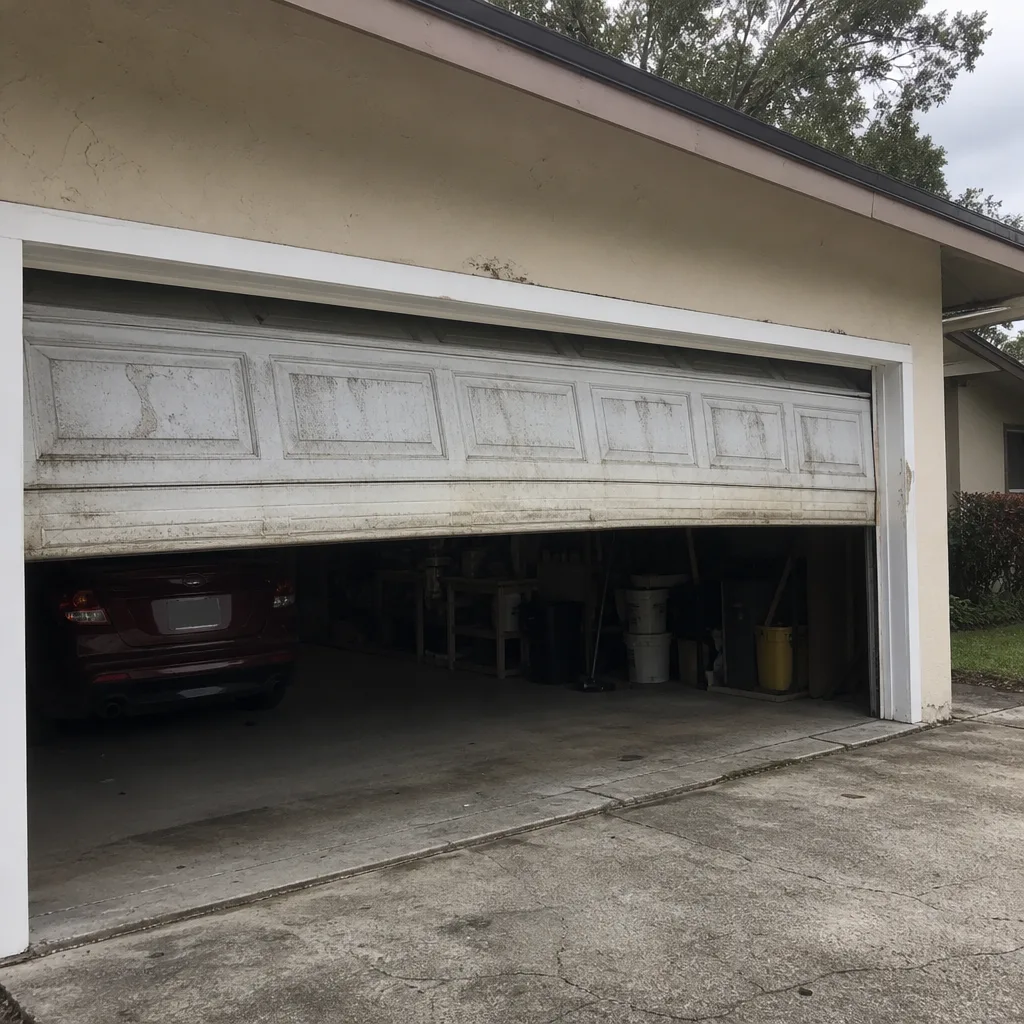 Before
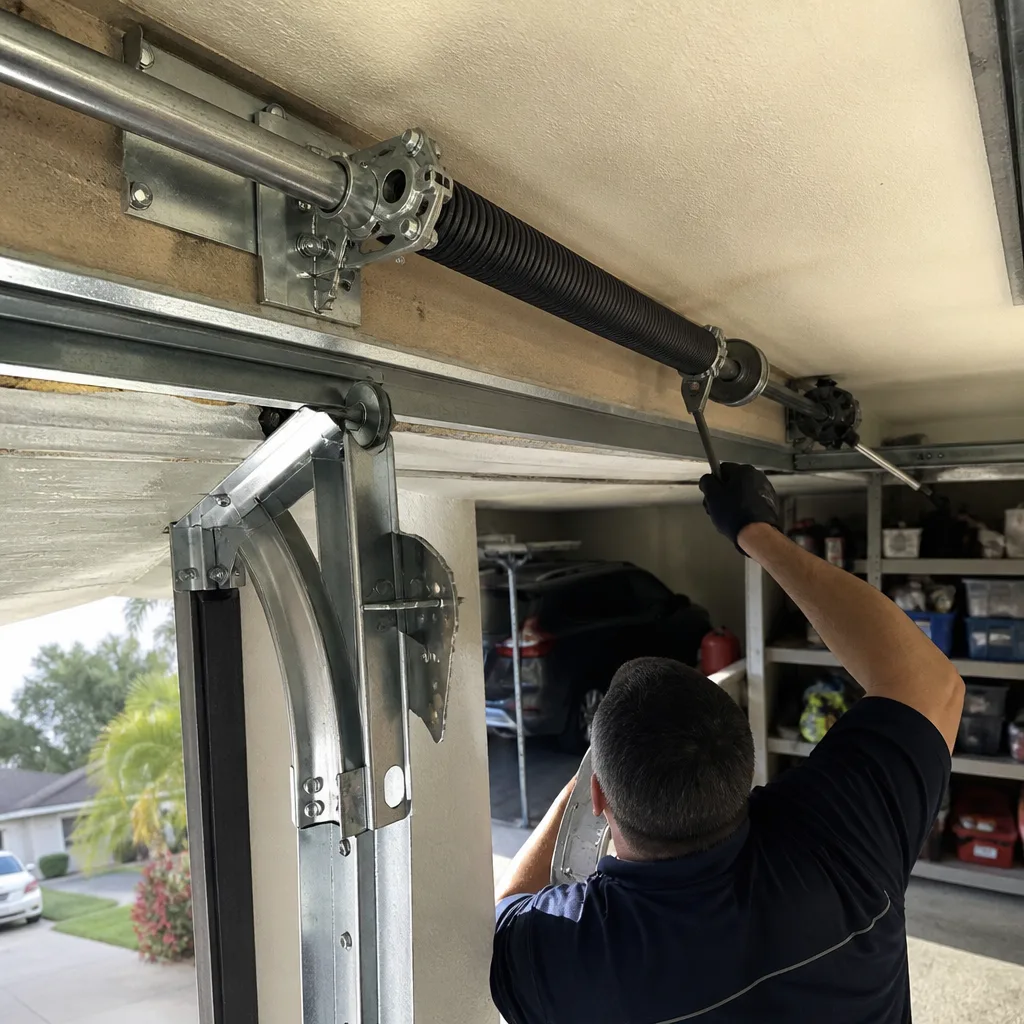 After
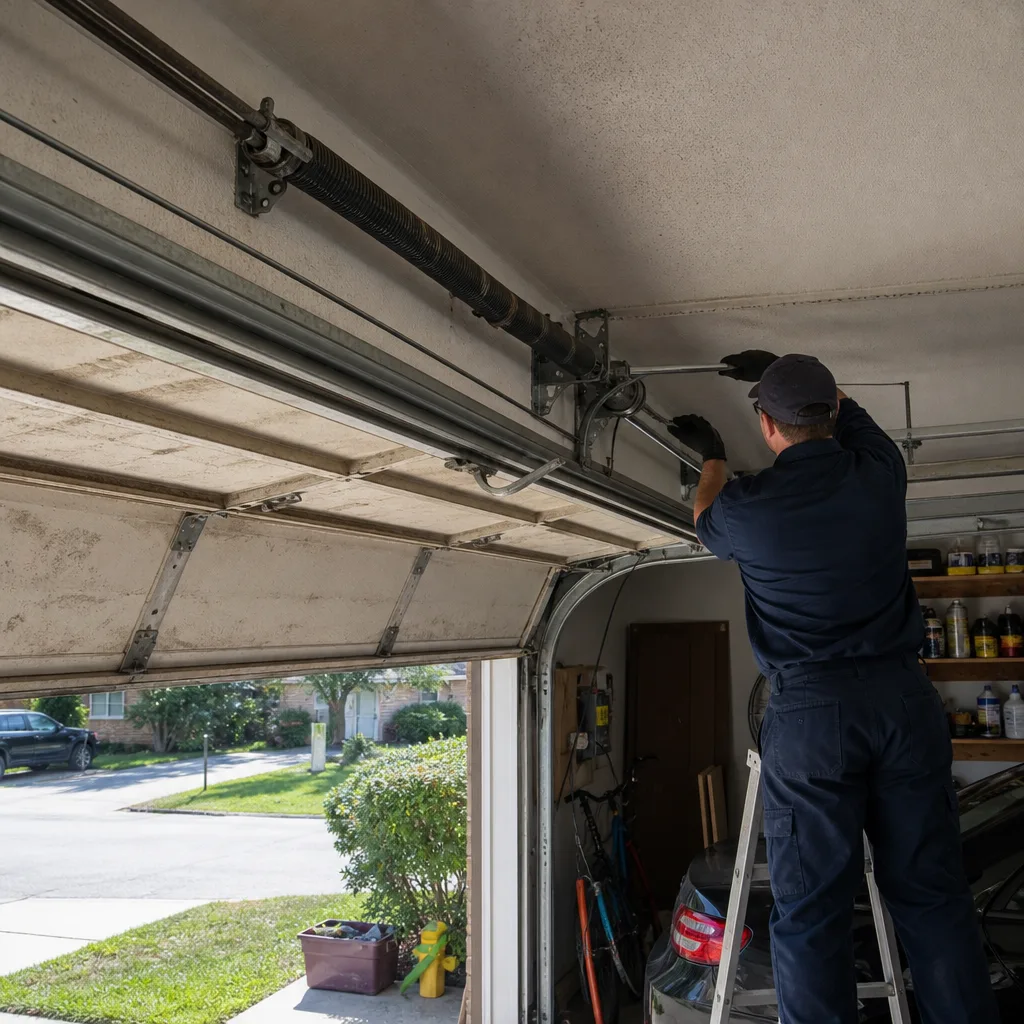 Before
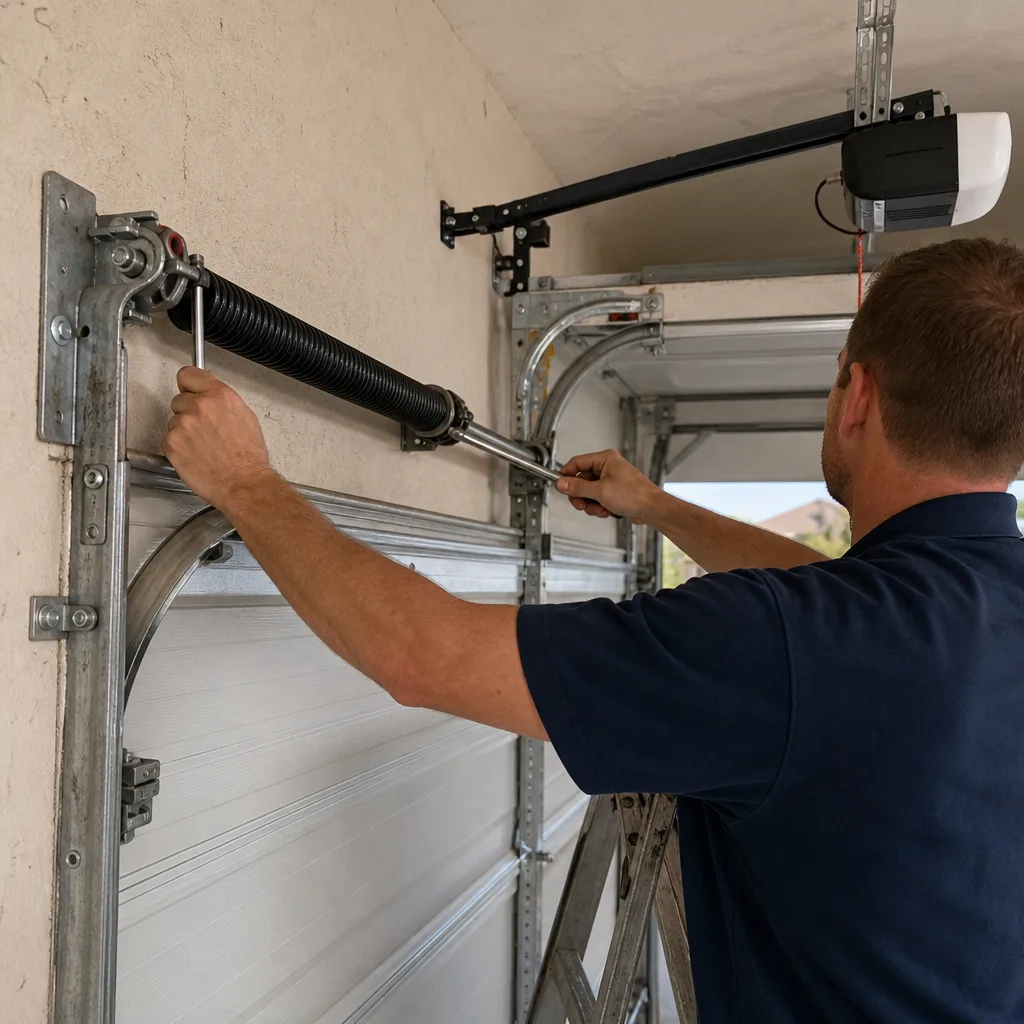 After
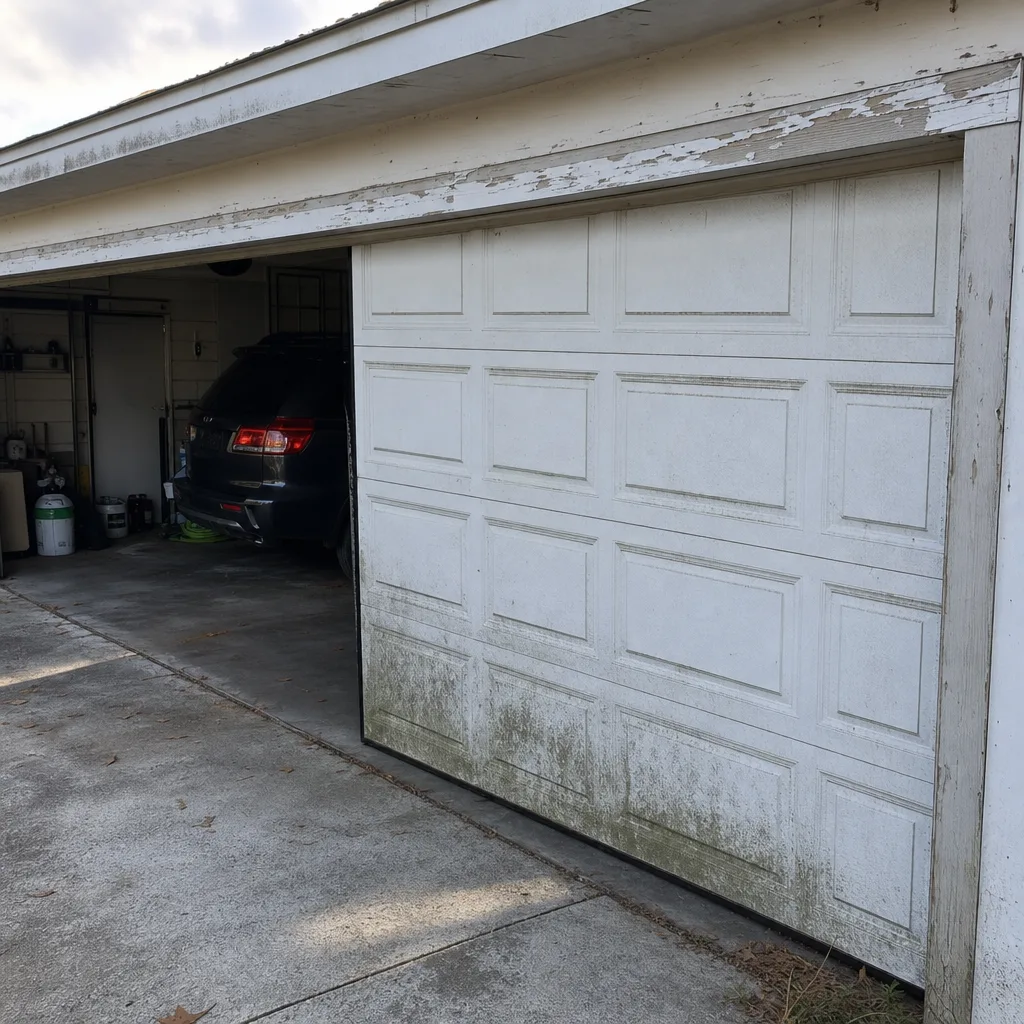 Before
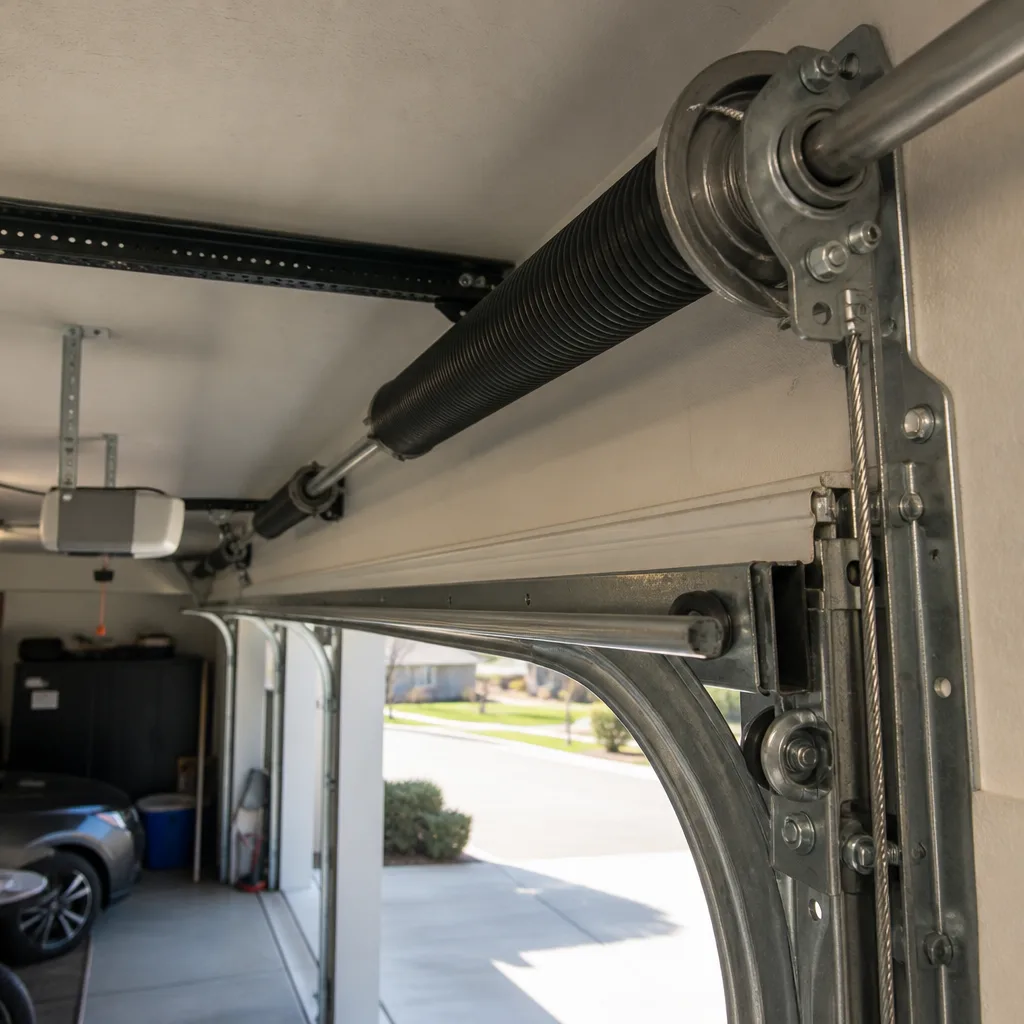 After
Frequently Asked Questions
First check whether the opener has power and the outlet is functioning. If the outlet is dead, your manual release cord will let you operate the door by hand until electricity returns. If the breaker is fine and the opener still hums without movement, the gears or logic board may have been damaged by surge or overwork. That’s an opener repair call, not a door problem. We repair LiftMaster, Chamberlain, Genie, Craftsman, and Raynor openers in Melbourne. Call (866) 472-4163 for a free estimate.
Yes, with the manual release cord. Make sure the door is fully closed first, then pull the red cord straight down to disengage the opener carriage. The door should lift by hand with moderate effort. If it’s heavy, don’t force it. That signals a spring problem that needs professional attention.
Use the manual slide lock that’s built into most garage doors, or clamp locking pliers on both vertical tracks directly below a roller. Then unplug the opener so it can’t strain against the lock. This simple three-step sequence physically prevents wind pressure from lifting the door off its tracks.
The most common failure we see is a functional door with dead electrics, followed closely by broken springs that rusted unnoticed over years of humidity and salt exposure, then gave way after the storm’s extra stress. The door itself is often fine, and the opener is the first thing to test once you’ve confirmed the mechanical system is sound.
Only if the door is resting on the floor, the springs and cables are intact, and only the bottom rollers on one side have slipped. In that case you can sometimes guide the roller back into the track. If the spring is broken, a cable is dangling, or the door is hanging above the floor, do not touch it. Call a specialist. Garage door springs carry enough tension to cause serious injury.
Times vary depending on the damage, the brand of your door and opener, and parts availability. Common brands like LiftMaster, Chamberlain, Clopay, and Amarr have faster local parts access than obscure discontinued models. Ironstone Garage Door Repair home service areas cover Melbourne and nearby communities. Call (866) 472-4163 during any emergency to discuss scheduling and get a free estimate.
The Bottom Line
Garage door emergencies in Melbourne are predictable, which means they’re preventable. The failures that strand homeowners after storms come from dead openers, rusted springs, skipped inspections, and wind damage that a four-dollar pair of locking pliers could have stopped. The manual release cord and the slide lock are the two pieces of garage hardware that matter most in a crisis, and most people don’t know they exist until it’s too late. Run through the inspection sequence before storm season, test the manual release on a calm day, and know which failures you can handle and which ones call for a brand-specific specialist. For more guides & resources, visit our blog.
Written by the team at Ironstone Garage Door Repair, serving Melbourne since 2016.